Logo DOAB
  • Publisher login
    • Support
    • Language 
      • English
      • français
    • Deposit
            View Item 
            •   DOAB Home
            • View Item
            •   DOAB Home
            • View Item
            JavaScript is disabled for your browser. Some features of this site may not work without it.

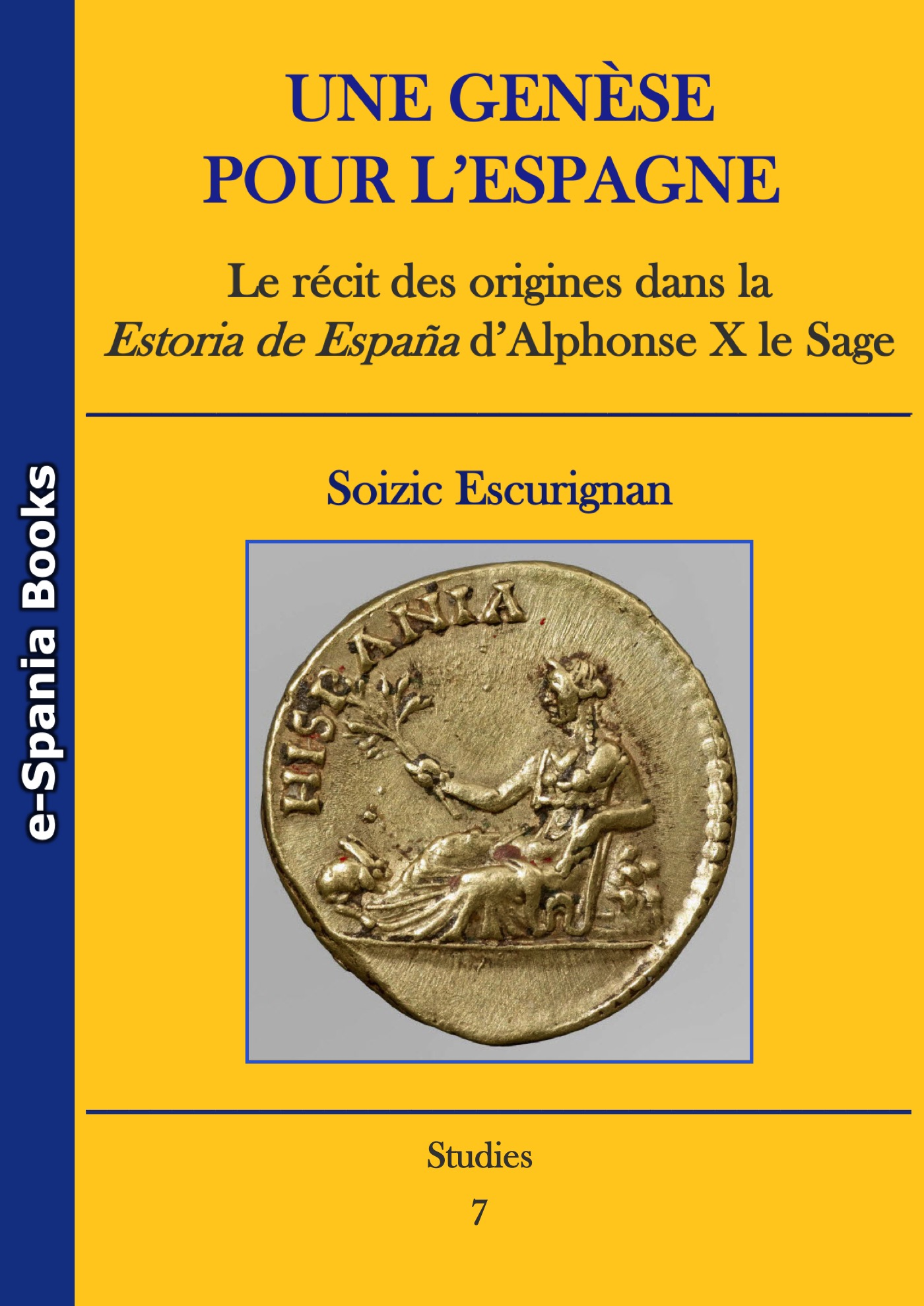
            Une genèse pour l’Espagne

            Le récit des origines dans la Estoria de España d’Alphonse X le Sage
            Thumbnail
            Download Url(s)
            https://books.openedition.org/esb/3172
            Author(s)
            Escurignan, Soizic
            Language
            English
            Show full item record
            Abstract
            La Estoria de España, written under the aegis of Alfonso X the Wise, King of Castile and León (1252-1284), traces the history of the Iberian Peninsula and more specifically of Castile, from its origins to the 13th century. While many renowned researchers have studied the Estoria, all of this work, which is also essential, only offers a partial view of the first part of the chronicle. No comprehensive study has in fact been devoted to the story of the origins. However, in order to measure the richness and complexity of peninsular history, it is necessary to take into account this large time interval between the beginnings of humanity and the year 711. The domination of the Greeks, the Carthaginians, the Romans, the Barbarians and the Visigoths, the collapse of the Kingdom of Toledo and the beginnings of the Kingdom of Asturias do indeed constitute a story of the origins. The author of the book therefore starts from the premise that the first 565 chapters of the Estoria cannot be considered as a mere preliminary without any political significance. Several questions are thus at the origin of this work: how do the new challenges of the 13th century (expansion of the borders of the kingdom, fecho del Imperio, new political conceptions, opposition of the nobility and the clergy, monopolization of writing by the king…) influence the conception of Spain's past? How does the Wise King found the greatness of the Iberian Peninsula, how does he legitimize its foundations and how does he define the exercise of royal power? The analysis of the different episodes, of the numerous portraits, of the relationships between the characters, as well as of the writing processes makes it possible to bring to light the textual and ideological originality of this part of the chronicle and the links between the Estoria and the Alphonsine ideal defended in the other works of the Wise King. Unraveling the biblical, ancient and medieval structures and topics used by the Wise King, the author reveals the different networks of symbolic, political, sapiential and spiritual transmission that are at work in the story and thus highlights the way in which the sovereign, by celebrating a common territory and past, guarantors of Hispanic identity, develops a myth of national creation; which allows Soizic Escurignan to conclude that the story of the origins is meant to be programmatic, and more than that, performative.
            URI
            https://directory.doabooks.org/handle/20.500.12854/85345
            Keywords
            Alfonso X the Wise; Estoria de España; historiography; Spain; representation of power; neo-Gothicism; creation myth; foundation; nation; organicism; naturalidad
            DOI
            10.4000/books.esb.3172
            Webshop link
            https://www.7switch.com/fr/ebo ...
            ISBN
            9782919448401
            Publisher
            e-Spania Books
            Publisher website
            http://books.openedition.org/esb
            Publication date and place
            Paris, 2021
            Series
            Studies,
            Classification
            European history
            Rights
            https://www.openedition.org/6540?lang=en
            • Imported or submitted locally

            Browse

            All of DOABSubjectsPublishersLanguagesCollections

            My Account

            LoginRegister

            Export

            Repository metadata
            Doabooks

            • For Researchers
            • For Librarians
            • For Publishers
            • Our Supporters
            • Resources
            • DOAB

            Newsletter


            • subscribe to our newsletter
            • view our news archive

            Follow us on

            • Twitter

            License

            • If not noted otherwise all contents are available under Attribution 4.0 International (CC BY 4.0)

            donate


            • Donate
              Support DOAB and the OAPEN Library

            Credits


            • logo Investir l'avenirInvestir l'avenir
            • logo MESRIMESRI
            • logo EUEuropean Union
              This project received funding from the European Union’s Horizon 2020 research and innovation programme under grant agreement No 871069.

            Directory of Open Access Books is a joint service of OAPEN, OpenEdition, CNRS and Aix-Marseille Université, provided by DOAB Foundation.

            Websites:

            DOAB
            www.doabooks.org

            OAPEN Home
            www.oapen.org

            OAPEN OA Books Toolkit
            www.oabooks-toolkit.org

            Export search results

            The export option will allow you to export the current search results of the entered query to a file. Differen formats are available for download. To export the items, click on the button corresponding with the preferred download format.

            A logged-in user can export up to 15000 items. If you're not logged in, you can export no more than 500 items.

            To select a subset of the search results, click "Selective Export" button and make a selection of the items you want to export. The amount of items that can be exported at once is similarly restricted as the full export.

            After making a selection, click one of the export format buttons. The amount of items that will be exported is indicated in the bubble next to export format.