
Innovation in Propagation of Fruit, Vegetable and Ornamental Plants
Download Url(s)
https://mdpi.com/books/pdfview/book/3043Contributor(s)
Roberto, Sergio Ruffo (editor)
Language
EnglishAbstract
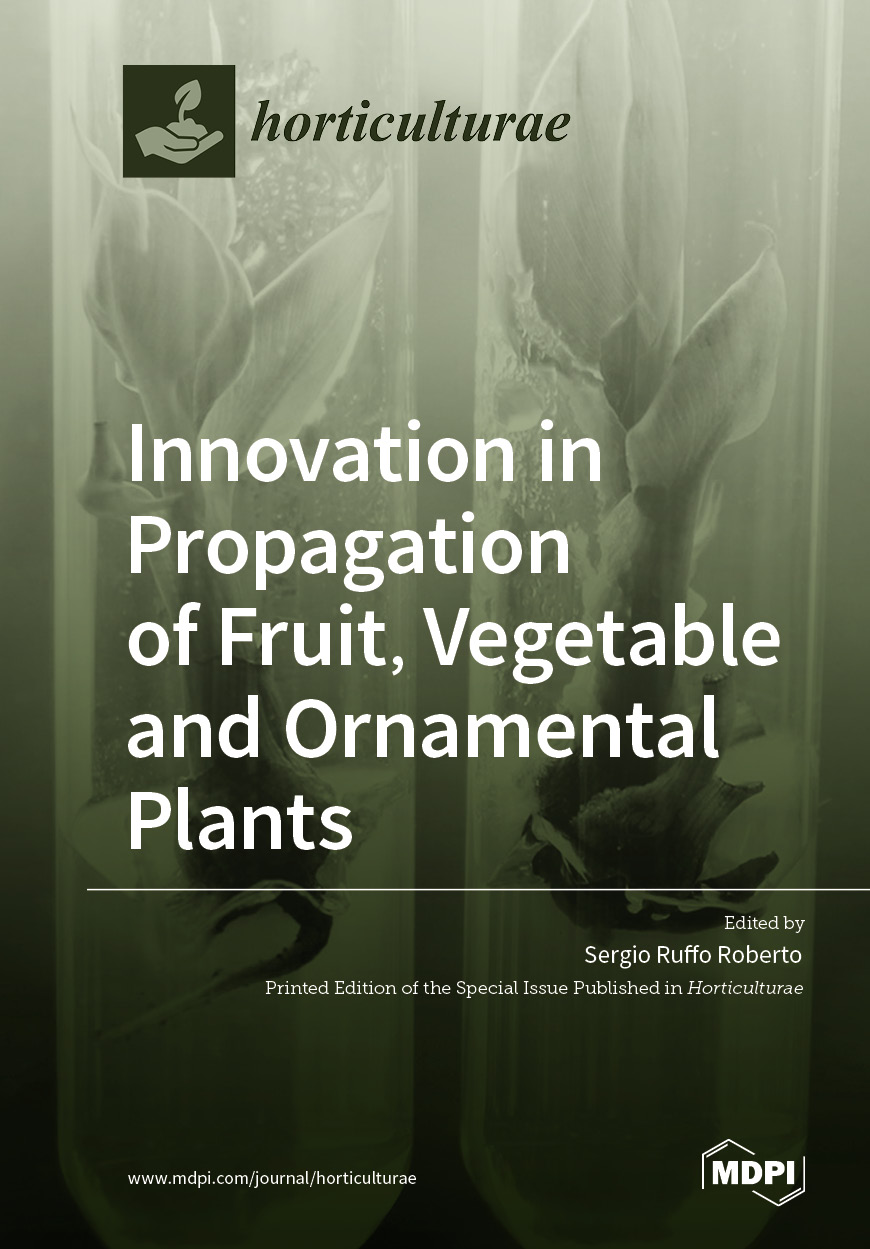
In horticulture, plant propagation plays an important role, as the number of plants can be rapidly multiplied, retaining the desirable characteristics of the mother plants, and shortening the bearing age of plants. There are two primary forms of plant propagation: sexual and asexual. In nature, the propagation of plants most often involves sexual reproduction, and this form is still used in several species. Over the years, horticulturists have developed asexual propagation methods that use vegetative plant parts. Innovation in plant propagation has supported breeding programs and allowed the production of high quality nursery plants with the same genetic characteristics of the mother plant, free of diseases or pests.
Keywords
Carya illinoinensis; orchards; seedlings production; emergence rate; Ericaceae; Vaccinium virgatum; micropropagation; in vitro culture; cytokinins; zeatin; 2iP; BAP; kinetin; WPM; clone aging; foundation-stock; genetic-disorder; non-infectious; epigenetic; pepper; propagation; domestic; wild; protocorm-like bodies; light-emitting diode; trehalose; maltose; CCC; correlation; growth retardants; rooting; cutting; forcing; oleander; shading; acclimatization; auxins; Dracaena draco; in vitro; auxin; rhizobacteria; Vaccinium spp.; bacterial wilt; Solanum melongena; susceptible; tolerance; exopolysaccharides; cell wall degrading enzymes; nursery plants; plant multiplication; seeds; cuttings; budding; grafting; biotechnologyWebshop link
https://mdpi.com/books/pdfview ...ISBN
9783039434107, 9783039434114Publisher website
www.mdpi.com/booksPublication date and place
Basel, Switzerland, 2020Classification
Research and information: general
Biology, life sciences
Pages
110
Except where otherwise noted, this item's license is described
as
https://creativecommons.org/licenses/by/4.0/