
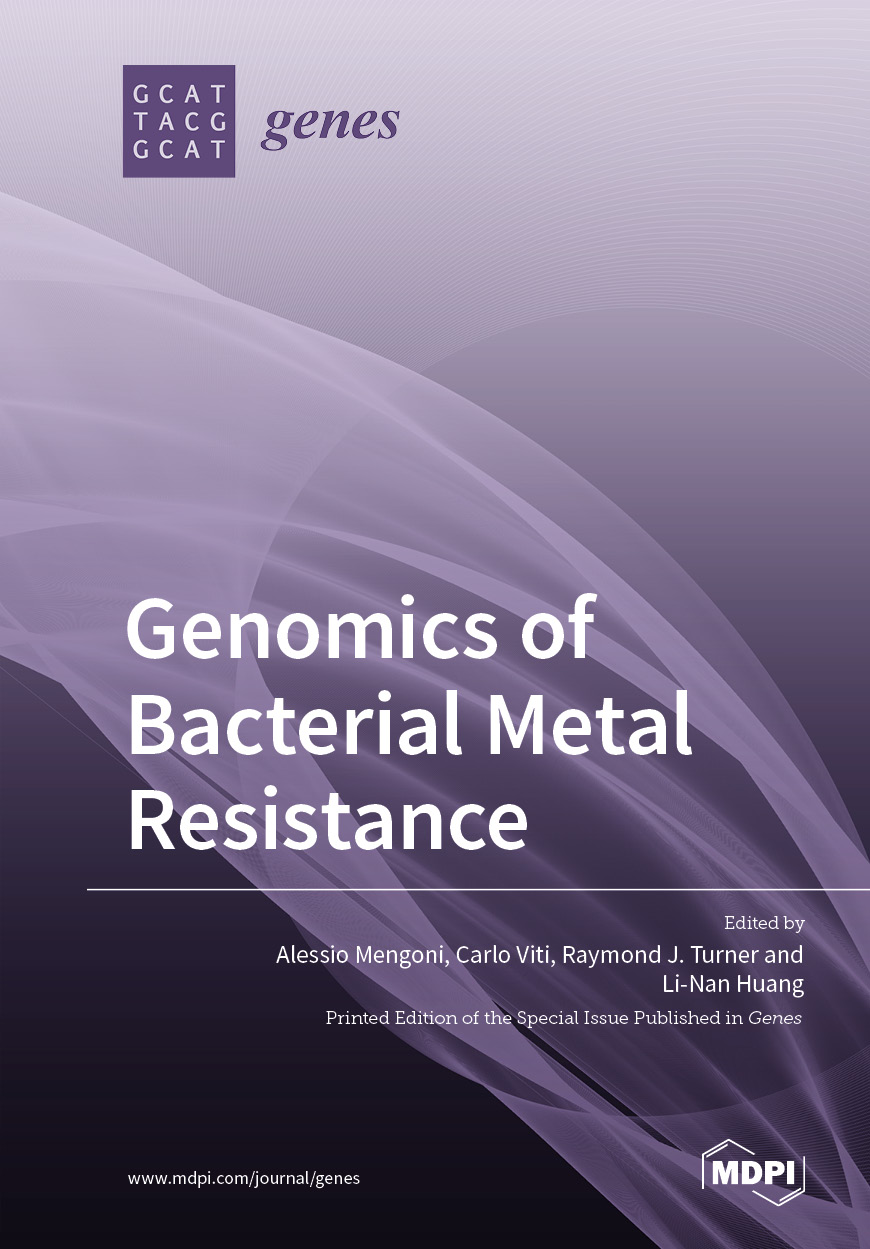
Genomics of Bacterial Metal Resistance
Download Url(s)
https://mdpi.com/books/pdfview/book/3447Contributor(s)
Turner, Raymond J. (editor)
Mengoni, Alessio (editor)
Viti, Carlo (editor)
Huang, Li-Nan (editor)
Language
EnglishAbstract
The importance of understanding metal–microbe interactions underlies a number of social–economic issues in the world. The antimicrobial resistance era has created a need for novel antimicrobials and within this fieldm metal and metalloid ions are promising solutions. Pollution sites, either co-contaminated with metals or with metals as the sole pollutant, contain microbes that are present as key participants, with both of these issues habing links to agriculture. Microbes also play key roles in the global geochemical cycle of many elements. Such statements solidify the need to understand metal–microbe interactions. Given that genomics has arguably become the most useful tool in biology, the application of this technology within the field of understanding metal resistance comes as no surprise. Whilst by no means comprehensive, this book provides examples of the applications of genomic approaches in the study of metal–microbe interactions. Here, we present a collection of manuscripts that highlights some present directions in the field. The book starts with a collection of three papers evaluating aspects of the genomics of the archetype metal resistant bacteria, Cuprividus metallidurans. This is followed by four studies that evaluate the mechanisms of metal resistance. The next two papers assess metal resistance in agricultural related situations, including a review on metal resistance in Listeria. The book concludes with a review on metal phytoremediation via Rhizobia and two subsequent studies of metal biotechnology relevance.
Keywords
silver; silver toxicity; silver resistance; Keio collection; Escherichia coli; antimicrobials; Acidithiobacillus ferrooxidans; copper resistance; biomining; envelope components; proteomics; lipopolysaccharide; genomic island; integrase; Acinetobacter baumannii; mobile genetic element; Ensifer (Sinorhizobium) sp. M14; arsenic-oxidizing bacteria; heavy metal resistance; draft genome sequence; comparative genomic analysis; biosafety; biotechnology for arsenic removal; adsorption; water treatment; in situ (bio)remediation; copper; resistance; swine; phenotype microarray; mobile genetic elements; Cupriavidus; metal; soil bioremediation; heavy-metals; serpentine soils; serpentine vegetation; genome manipulation; cis-hybrid strains; heavy metals; genomic islands; genomic rearrangements; metal resistance genes; Mucilaginibacer rubeus; Mucilaginibacter kameinonensis; evolution; CTnDOT; Listeria monocytogenes; cadmium; arsenic; gallium; antimicrobial agents; metal toxicity; metal resistance; metal-based antimicrobials; platinum resistance; RNA-Seq; multireplicon; Nanopore; adaptive laboratory evolution; n/aWebshop link
https://mdpi.com/books/pdfview ...ISBN
9783036503905, 9783036503912Publisher website
www.mdpi.com/booksPublication date and place
Basel, Switzerland, 2021Classification
Research and information: general
Biology, life sciences
Pages
238
Except where otherwise noted, this item's license is described
as
https://creativecommons.org/licenses/by/4.0/