
Renaissance skin
Language
EnglishAbstract
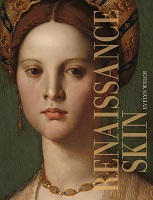
Skin in the Renaissance was understood very differently from the skin we know today. In the humoural world of Europe between 1500 and 1700, it was the clothing of the body, a net or a web. It was the skin that forms on hot milk or gruel as it cooled; it was dried polenta, bark, apple peel and the very crust of the earth itself. Whether human or animal, it was understood as highly, and often dangerously, porous. As such Renaissance skin was opened to allow internal vapours to leave the body (as sweat, tears, urine, faeces and hair) and closed against external elements. This book explores Renaissance skin as a bodily surface, as physical matter and as a generator of new knowledge. It asks how you managed your health in a changing global environment, one where the air itself could be pathogenic, where syphilis suddenly appeared and where smallpox became much more virulent. How did you see your body in a world where there was suddenly a multiplicity of skin colours and skin decorations? Ranging across anatomy, surgery and sausage making, it explores how skin was managed by physicians and surgeons as well as by glovemakers, butchers and parchment makers. It asks what happens when you see skin differently, either in the marketplace as men and women from far-away places were put on display, or under the microscope. In doing so, it allows us to see the past as having a distinctive, and very different way of understanding bodily experiences.
Keywords
the Renaissance; early modern period; depictions of skin; cultural history of skin; skin diseases; Renaissance art; Wellcome Trust Senior Investigator Award; baldness; pox; animal skin; cosmetics; clothing; Titian; Wenceslaus Hollar; Jean Michelin; Rembrandt van Rijn; Pieter Bruegel the Younger; Pieter Aertsen; Joachim Beuckelaer; tanning; Mattia Giegher; art history; material culture; fashion history; Wolfson History Prize; skin; medical humanities; history of medicine; Renaissance Europe; early modern Europe; smallpox; history of skin colour and race; history of slavery; history of microscopy; history of scienceDOI
9781526167767ISBN
9781526167750Publisher
Manchester University PressPublisher website
http://www.manchesteruniversitypress.co.uk/Publication date and place
2025Classification
History of art
Renaissance style
Human figures depicted in art
Pages
400
Except where otherwise noted, this item's license is described
as
open access