
Fallait-il canoniser Thérèse de Lisieux ?
Entre durables objections et plaidoyer de Benoît XV (1914-1921)
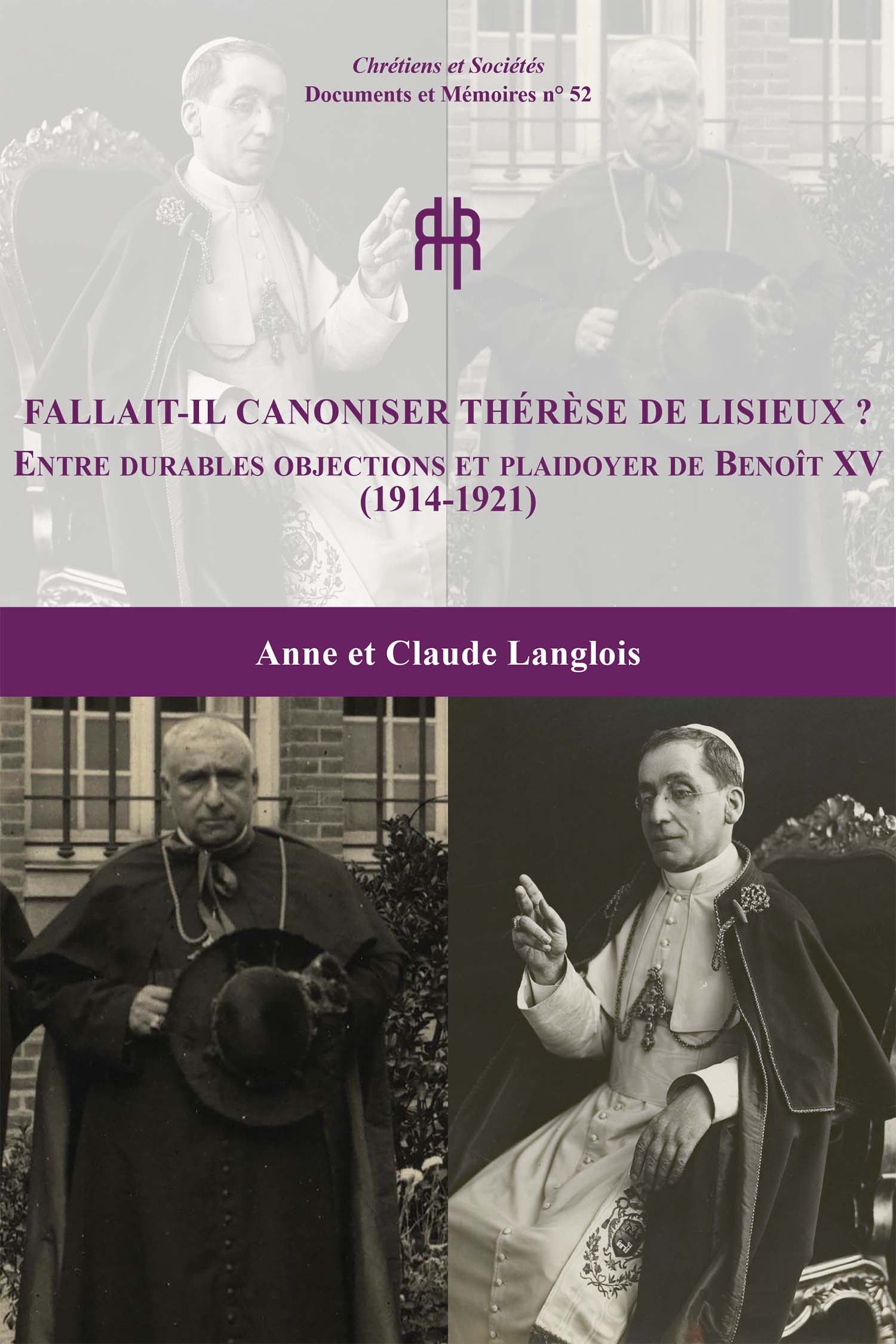
Abstract
Thérèse of Lisieux continues to be showered with honours, directly as a Doctor of the Church in 1997, and indirectly through the canonisation of her parents in 2015. And yet, what made her famous - the account of her life in Histoire d'une âme, a work published in 1898 the day after her death, and the promotion from 1907 of a new spirituality (spiritual childhood) - soon came up against the objections of the Congregation of Rites. As early as 1914, Mgr Verde fulfilled his role as devil's advocate by denouncing the illegitimacy of Thérèse's testimony at her own trial. Pius X overruled him and the apostolic trial began. But in 1920 and 1921, when the examination of the virtues was still underway, there was a real revolt among the consultors, half of whom initially made their opposition known, adding to the classic objections set out by Verde and his successor Mariani, a more gendered objection, of a psychopathological nature, relating to ‘that serious and strange illness, perhaps hysteria’, to her ‘hypersensitive nervous constitution’. All the virile voluntarism that underlies the heroic virtues is thus dismissed as a ‘presumption to achieve a supernatural end by human means, and a fallacious desire to be self-sufficient in the hour of peril and temptation’.
Keywords
canonization; Teresa of Lisieux; Benedict XV; Mariani (Angelo); Verde (Alessandro); modern CatholicismDOI
10.4000/13kvbWebshop link
https://www.7switch.com/fr/ebo ...ISBN
9791091592468, 9791091592390Publisher
LARHRAPublisher website
http://books.openedition.org/larhraPublication date and place
Lyon, 2024Series
Chrétiens et Sociétés. Documents et Mémoires,Classification
European history
History of religion
Pages
164
Except where otherwise noted, this item's license is described
as
https://creativecommons.org/licenses/by-nc-sa/4.0/