
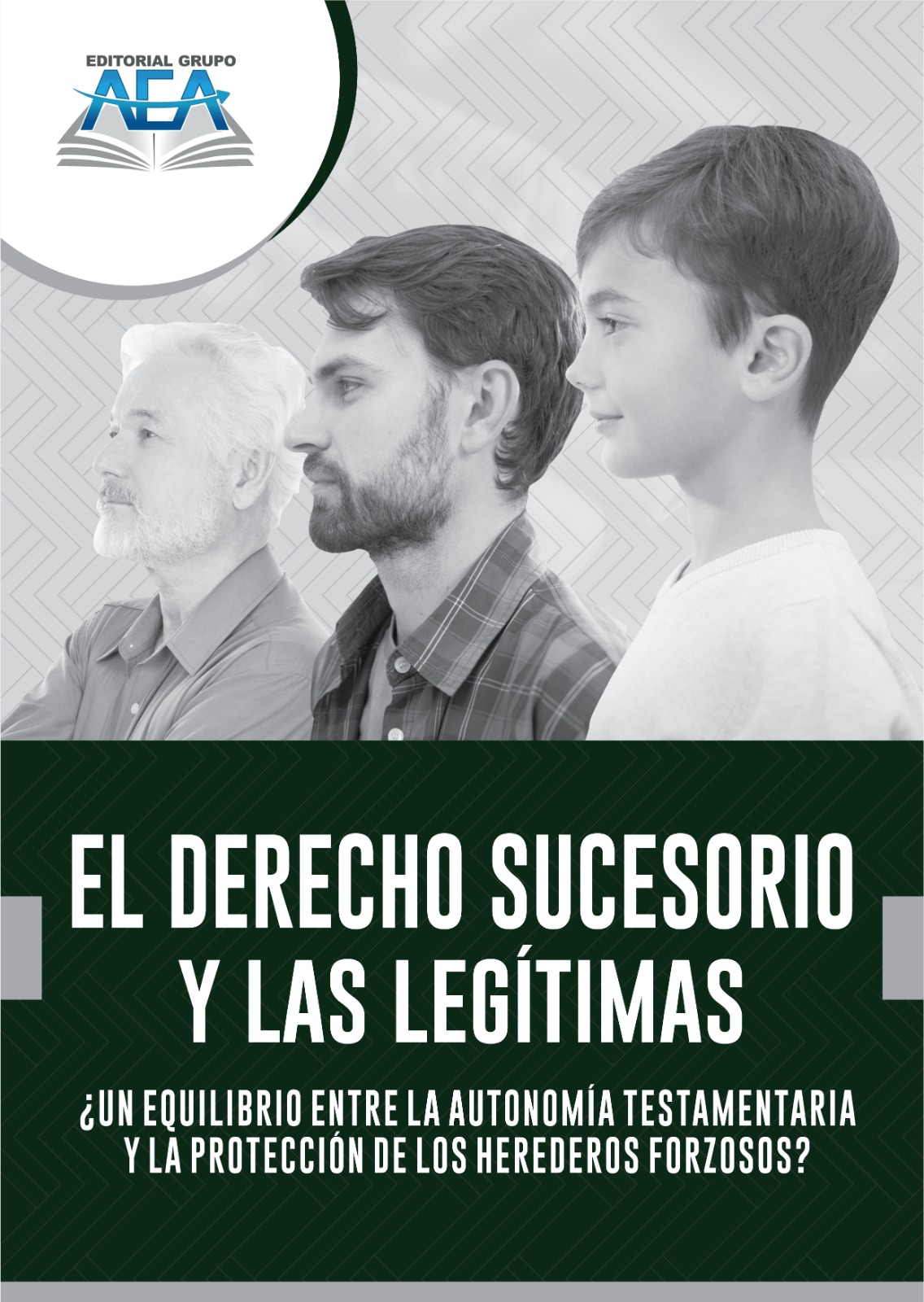
El derecho sucesorio y las legítimas: ¿Un equilibrio entre la autonomía testamentaria y la protección de los herederos forzosos?
Version
PublishedLanguage
SpanishAbstract
Inheritance law, a branch of private law, is concerned with regulating the transfer of property and rights belonging to a deceased individual to his or her heirs. This process, known as succession mortis causa, has as its main objective to harmonize the freedom of testamentary disposition of the deceased with the safeguarding of the forced heirs, those who are legally entitled to receive a portion of the inheritance. Within the scope of inheritance law, normative provisions are established governing the distribution of assets, as well as the criteria for the validity and formality of wills. In addition, the legitimate shares are defined, which represent the portions of the inheritance destined to be compulsorily reserved for the forced heirs. This branch of law plays a fundamental role in guaranteeing a fair and equitable distribution of the assets and rights of a deceased person, while protecting the rights of the forced heirs and respecting the testamentary will of the deceased. El derecho sucesorio, una rama del derecho privado, se ocupa de regular el traspaso de los bienes y derechos pertenecientes a un individuo fallecido hacia sus herederos. Este proceso, conocido como sucesión mortis causa, tiene como objetivo principal armonizar la libertad de disposición testamentaria del difunto con la salvaguardia de los herederos forzosos, aquellos que legalmente tienen derecho a recibir una porción de la herencia. Dentro del ámbito del derecho sucesorio, se establecen disposiciones normativas que rigen la distribución de los activos, así como los criterios de validez y formalidad de los testamentos. Además, se definen las legítimas, las cuales representan las porciones de la herencia destinadas a ser reservadas obligatoriamente para los herederos forzosos. Esta rama legal desempeña un papel fundamental en garantizar una distribución justa y equitativa de los bienes y derechos de una persona fallecida, al mismo tiempo que protege los derechos de los herederos forzosos y respeta la voluntad testamentaria del fallecido.
Keywords
Derecho sucesorio; Herederos; Autonomía testamentaria; Legítimas; DistribuciónISBN
978-9942-651-31-0Publisher
Editorial Grupo AEAPublisher website
https://www.editorialgrupo-aea.comPublication date and place
Ecuador, 2024-05-29Classification
Law
Pages
124
Except where otherwise noted, this item's license is described
as
https://creativecommons.org/licenses/by-nc-sa/4.0/