
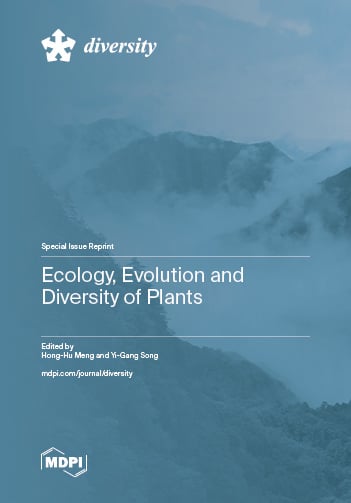
Ecology, Evolution and Diversity of Plants
Download Url(s)
https://mdpi.com/books/pdfview/book/8941Contributor(s)
Meng, Hong-Hu (editor)
Song, Yi-Gang (editor)
Language
EnglishAbstract
Globally distributed plants occupy a large proportion of the biodiversity on our planet, and the ecological and evolutionary mechanisms that determine plant diversity are incredibly successful. We are now living in times of dramatic environmental change triggered by human activities and climate changes. Increased pressure from both humans and the environment is accelerating biodiversity loss and changing biodiversity patterns. In this context, work aiming to understand the ecological and evolutionary mechanisms that drive plant diversity is important and interesting.
Keywords
Ficus; Indo-Burma; genetic structure; human cultivation; nSSRs; species abundance distribution (SAD); neutral process; Tiankeng forests; negative terrain; plant refuge; chloroplast DNA; ITS; Stilpnolepis; allopatric divergence; genetic diversity; spatial genetic structure; mating system; Rhizophora apiculata; Avicennia marina; habitat destruction; conservation; restoration; phylogeny; biogeography; divergence; critically endangered; rare species; genetic divergence; isolation by distance; biodiversity conservation; xerophytic relict plant; source-sink metapopulations; ddRAD-seq; Asia; Biogeography; Bauhinia; Fabaceae; late Eocene; vegetation restoration; phytoplankton; Shengjin Lake; environmental factors; flower-visitor; insect pollination; plant species; urbanization; diversity; functional group; pollination network; green space; Polygonum criopolitanum; distyly; style-morph ratios; seed sets; strict self-incompatibility; weed seeds; seed identification; target detection; convolutional neural network; YOLOv5; early seedling growth; Eremurus anisopterus; hermaphrodite–gynomonoecious sexual system; inbreeding depression; offspring fitness; seed germination; seed mass; Xizang; Rhodiola namlingensis; Rhodiola wangii; new species; taxonomy; radiation; Salvia miltiorrhiza; subg. Glutinaria; plastid genome; phylogenomics; latitudinal diversity gradient; species richness; biodiversity pattern; climate change; diversification; speciation; extinction; flora; vegetation; origin; evolution; Yunnan; SW China; character evolution; bulbil; inflorescence architecture; floral color; perianth opening degree; Bletilla striata; compound system of bamboo and orchid; endophytic fungi; fungal diversity; symbiotic relationship; Gastrochilus; niche; Asian Monsoon; endangered species; integrative evidence; Pyrus hopeiensis; Pyrus ussuriensis; taxonomic uncertainty; n/a; aril; conservation genetics; Eleutharrhena macrocarpa; evolutionary distinctiveness; Himalayan uplift; Menispermaceae; southern Yunnan rainforests; Tiliacoreae; Elaeagnus moorcroftii Wall.; PacBio’s high-fidelity sequencing; Hi-C-assisted assembly; whole genome duplication; xerophyte; drylands; Paris polyphylla; transcriptome; polyphyllin; EST-SSR markers; biodiversity; T. doichangensis; gene flow; conservation priority; endemic taxa; Viburnum; geographical pattern; abiotic stress; genotyping; okra; phenotyping; molecular markers; SSR; land plants; molecular systematics; morphology; tree of life; distribution; habitat suitability; Nymphaea; land use; Orchidaceae; investigation; mountains; Poyang Lake basin; germplasm resource; database; numerical taxonomy; random forest; bipartite networks; modularity analysis; apparent competition; minimum spanning tree; Renyi diversity; new syntaxa; CART; MCSN; taxonomy modeling; classifier modeling; biodiversity loss; conservation genomics; Fengshui/shrine/temple forests; human impact; hemiparasite–host species; phylogenetic; Cassytha; Lauraceae; woody plants; Taraxacum kok-saghyz; Hevea brasiliensis; Eucommia ulmoides; genome-wide; SPLs; expression patternWebshop link
https://mdpi.com/books/pdfview ...ISBN
9783725803989, 9783725803972Publisher website
www.mdpi.com/booksPublication date and place
2024Classification
Technology: general issues
Pages
534
Except where otherwise noted, this item's license is described
as
https://creativecommons.org/licenses/by-nc-nd/4.0/