
Epistemic Issues in Non-classical Religious Belief
Download Url(s)
https://mdpi.com/books/pdfview/book/7631Contributor(s)
Eyghen, Hans Van (editor)
Language
EnglishAbstract
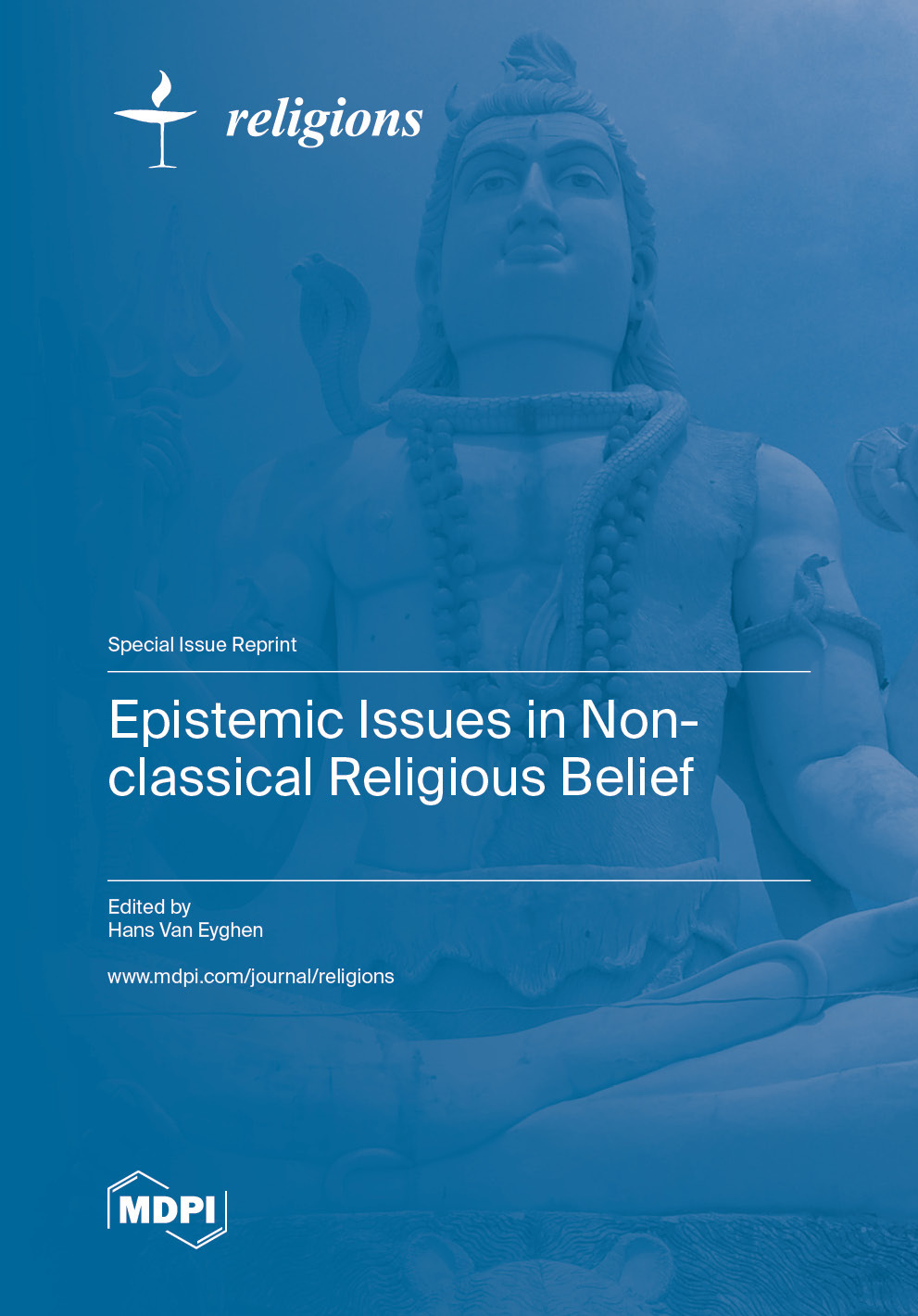
This Special Issue addresses philosophical questions regarding various non-classical religious beliefs. The contemporary philosophy of religion includes an active and venerable tradition of arguments concerning religious beliefs. While some new approaches address different questions, the vast majority address the belief in and nature of God. Frequently, ‘God’ is defined as a perfect being: a supernatural being with the greatest powers and qualities (omniscience, omnibenevolence, necessity, omnipresence, etc.) who created the universe. This concept of God is often labeled as ‘classical theism.’ While defining ‘God’ as a perfect being is fairly common in Abrahamic religious traditions, it is far less prevalent in non-Western traditions. In Indian religions, Gods are bound by karma and therefore not omnipotent. In Afro-American traditions, vodoun or loa are sometimes regarded as localized and therefore not omni-present. Many adherents of Christianity, Islam, and Judaism also hold beliefs on ‘intermediary’ supernatural beings that lack perfection, such as angels, demons, and Jinn. This Special Issue contains publications that discuss various topics pertaining to non-classical religious beliefs, including the epistemic features of belief in spirits or demons, belief in angels, belief in animism, process theism, Indian beliefs and practices, Chinese philosophy of religion, Afro-Brazilian practices, and neo-pagan spirituality.
Keywords
natural theology; spirits; demonology; classical theism; neoclassical theism; process theism; monopolar theism; dipolar theism; Charles Hartshorne; Alfred North Whitehead; Joshua Sijuwade; ghosts; demons; angels; spiritual entities; inference to the best explanation; the scientific method; the criteria of adequacy; methodological naturalism; the supernatural; Satan; metaphysics; gaps-based objections; mental disorders; cognitive science; devil; explanatory reasoning; animism; common consent arguments; disagreement; social epistemology; religious experience; Bengal; ritual; body; sound; affect; drum; dhak; Durga; Shiva; gnoseology; mind; Giordano Bruno; Wang Yangming; colonialism; ethics; South Asia; interpretation; explication; logic; belief; the West; Yoga; dharma; neopagan; pagan; Asatru; soteriology; Axial Age; mythology; Norse; classical Greece; John Hick; Paul Tillich; Mircea Eliade; sacred space; karma; rebirth; merit; transfer of merit; philosophy of religion; Plato; platonic forms; Afro-Brazilian religions; Candomblé; Umbanda; religious practice; religious cognition; embodied paradigm; conceptual metaphor; extended mind; languaging; enactivismWebshop link
https://mdpi.com/books/pdfview ...ISBN
9783036581262, 9783036581279Publisher website
www.mdpi.com/booksPublication date and place
Basel, 2023Classification
Religion & beliefs
Religion and beliefs
Pages
222
Except where otherwise noted, this item's license is described
as
https://creativecommons.org/licenses/by/4.0/